6.07.2011

Rhubarb Coffeecake: a soaked whole grain recipe


When the farmer's market opens in the spring it's pretty much just asparagus and rhubarb. And plants. Lots of plants. I buy asparagus every Wednesday and Saturday until it's gone, since this is the only time of year it's in season! I roast it, steam it, put it in quiches, eat it with pasta...I could eat it every day and not get sick of it.

But rhubarb is a little trickier. I love its bright, tangy flavor, but I don't always know how to best use it. It's often combined with strawberries, but those haven't quite appeared yet (they're coming soon!) and I don't have any in the freezer from last year, so my rhubarb has to stand alone. We've been enjoying it in two ways this year: rhubarb compote, and rhubarb coffeecake.

The compote is easy enough: chop a few stalks, put it in a small saucepan with a splash of water, add a little sweetener and cinnamon, and cook until it softens. Eat it by itself, in your oatmeal, on your pancakes, or on top of vanilla ice cream.

And this coffeecake is a cinch, too. I've made it twice in the last week and that's probably not the last we'll see of it this season. :) Even better, the batter is soaked to provide better absorption of nutrients. Don't be intimidated by that step - you can do this!

Recipe notes:
  • Start this the day before you want to bake it. Be sure to plan ahead!
  • You are welcome to try it with all whole grain flour, but I haven't tried it yet. I think the texture is perfect with the 1/2 c. of all-purpose flour added, and I don't freak out about it since we eat mostly whole grains. If you do use all whole grain flour, add it all to the soaking step.
  • Make sure whatever dairy you use is cultured. If it isn't, add 1 T. of raw apple cider vinegar or lemon juice to the soaking step.
  • Chop the rhubarb coarsely if you want noticeable chunks, or finely if you want it to have more of a vague rhubarb flavor. I like chunks.


Soaked Rhubarb Coffeecake


Soaking step:
2 cups white whole wheat flour
1 c. buttermilk, sour milk, yogurt, or kefir

The next day:
1/2 cup unbleached all purpose flour
1 t. baking soda
1 t. unrefined sea salt
1/2 c. butter, softened
1 1/4 c. sucanat (an unrefined cane sugar)
1 large egg
1 1/2 t. vanilla
2 c. chopped rhubarb

Topping:
2 T. butter, softened
1/3 c. sucanat
1 T. unbleached all-purpose flour
1 T. cinnamon

Directions:
  1. To soak the flour, combine with the cultured dairy in a stand mixer (or mix by hand) until evenly moistened. Cover with a damp towel and a plate and put in a warm place for 7-24 hours.
  2. When you are ready to bake the cake, preheat the oven to 350 and grease two 9-inch cake pans or one 9x13-inch pan.
  3. Chop your rhubarb and set aside.
  4. Stir together the all-purpose flour, baking soda, and salt in a small bowl.
  5. Remove the soaked dough from your mixing bowl (you can place it on the plate you used to cover your bowl). Cream together the butter and sucanat. This will take a little longer than you're used to with regular sugar, but be patient and keep mixing until it is evenly combined (you'll still see little pieces of sugar, that's ok).
  6. Add the egg and beat to combine.
  7. Add the soaked dough back in and mix until there are no chunks of dough left. Be sure to scrape the sides and bottom of the bowl.
  8. Add the vanilla, and then the dry ingredients, then the rhubarb, mixing after each addition. Mix just until combined. Spread into the prepared pan (it may not reach the sides, but it will spread out as it bakes).
  9. Prepare your topping: Mix together the butter, sucanat, flour, and cinnamon until evenly combined. Sprinkle over the batter.
  10. Bake for 25-30 minutes for rounds, or 30-35 for 9x13, until golden brown and a toothpick comes out clean. Cool 20 minutes or so before serving.
If you want to take it to the next level, serve with rhubarb compote on top!

What's your favorite way to eat rhubarb?


(This post is part of Tempt My Tummy Tuesday, Real Food Wednesday, and Sweets for Saturday.)

This is now also a part of the Seasonal Recipe Round-up at GNOWFGLINS.

5.24.2011

Easy Change #4 - Switch to Coconut Oil


This post is a part of my Easy Changes You Can Make Today series. Check out the previous posts and make an easy change today!

It's been a few weeks since I posted an easy change. But let's get back into it! So far we've covered homemade mac & cheese, homemade EASY salad dressing, and how to start reading ingredient labels. I'm super excited about today's post because it really is a simple switch, and it can have a huge impact on your health!

Today I challenge you to STOP buying vegetables oils. That means canola oil, soybean oil, corn oil, peanut oil, safflower oil, sunflower oil, ect. If a recipe calls for "vegetable oil," use coconut oil instead!

First, the why. As I learned in the very amusing documentary "Fat Head" (watch it for free on hulu!), these vegetable oils are a very new addition to our diet if we think about the scope of human history. I know, you're saying, "I thought canola oil was a healthy oil!" Well, we've been misinformed. All vegetable oils are very susceptible to going rancid, especially when heated. And in processing, they are heated to super high temps, and then deodorized because when something goes rancid, it stinks. They also have a nice bit of yellow color added to them to make them look more appetizing. Yum.

Also, they are high in omega-6 fatty acids. We do not need any more of those suckers. With most meat and dairy (and even farmed salmon!) being corn-fed, we already get way more than necessary.

They are also almost always genetically modified. The trouble with GMO's is that we just don't know if they are safe or not. They are too new. But we certainly haven't become any healthier since they've been around, so I'd rather not risk it. They are pretty hard to avoid, but this is one step you can take. Yay! Baby steps! (Click here for more of the scoop on vegetable oils.)

So why is coconut oil a healthy alternative?

1) Healthy saturated fat.
I know you still can't believe it, but saturated fats actually don't clog arteries or cause heart disease. Polyunsaturated vegetable oils and partially hydrogenated oils do. Healthy saturated fats like butter, coconut oil, lard, and tallow actually do the following (according to this source):
  • strengthen the immune system
  • protect against cancer
  • regulate insulin receptors and thereby protect against diabetes
  • lower your chances of getting asthma because they help your lungs function properly
  • suppress inflammation
  • help your brain work better (did you know that more than half the brain is made up of saturated fat?!)
  • carry fat-soluble vitamins A, D, and K2 which are essential for good health!

2) Lauric Acid=anti-microbial
Lauric acid is the same stuff that is in breast milk to help protect infants from getting sick. And coconut oil is full of it! Score!

3) Weight Loss
According to the book Eat Fat Lose Fat, coconut oil actually helps you LOSE excess weight! And when you eat enough fat, you feel satisfied sooner, so you are less apt to binge on junk food.

4) It's traditional.
People in tropical climates have been eating this stuff for thousands of years without getting heart disease.

Is that enough reasons for you?

Where can you find coconut oil?
You can find coconut oil at most larger grocery stores (like Meijer, around here) or health food stores, but you're going to pay an arm and a leg. I order it online to get a better deal. I've found the best price to be through Columbus Foods, and it seems to be a very high quality oil. (Here is the link - scroll down to "Coconut Oil, Extra Virgin".) You can also buy it through Mountain Rose Herbs or Tropical Traditions.

When you buy coconut oil, look for the words "virgin" or "unrefined". If you REALLY can't stand the taste of coconut (though I don't usually notice it) you can buy the cheaper refined variety, but it loses many of its health benefits. Refined coconut oil is still a healthier choice than vegetable oils, though!

If you're afraid to go out on a limb and buy a gallon of the stuff, buy a small jar from the store to try it out. Or split a gallon with a friend or two!

How do you use it in recipes? Here are a few ways:

1) Sauteing.
I use coconut oil in most recipes that call to saute something in olive oil, because it has a higher smoke point and is safer for sauteing. If the recipe is one with a mild flavor where the coconut flavor might be obvious, I'll use olive oil or butter. But there are some recipes where it works great, like curries, anything with fish, stir fries, etc.

2) Baking, in place of a liquid oil.
Coconut oil is solid at room temperature unless the room is quite warm (it melts at 76 degrees F). So to use it in place of a liquid oil, you have to melt it. I usually put it in a stainless steel measuring cup and place it over very low heat right on my stovetop. You can also melt it gently in a saucepan, or place it (in a glass jar) on top of the oven when the oven is on. Make sure it's not too hot when you add it too your recipe.

3) Baking, in place of a solid fat.
If a recipe calls for butter, lard, or (eek!) margarine, you can use coconut oil. I sometimes use it instead of butter simply because it's slightly less expensive per pound than the high quality butter I like to buy. Just use it as is, solid at room temperature.

Here's another post about coconut oil with lots of ideas for how to use it!

One more tip.
If you order a gallon of this stuff, you are going to get it in some sort of big plastic container. To make everyday use easier, I transfer it to glass quart jars (available in the canning section of your grocery store or hardware store). The stuff from Soaper's Choice comes in a bottle that should really be for a pourable oil - with a small spout. So I put it on top of the oven when I have it on a low heat for granola or something, and when it gets melty I pour it (carefully! sometimes it splashes!) into my jars. When you order from Mountain Rose or Tropical Traditions it comes in a bucket, so you can just scoop it out with a spoon into jars.

So order some! It's an easy change you can make today! :)

This is part of Real Food Wednesday. Check it out for more real food recipes and ideas!

Real Life Confession: bad freezer habits

I am a real person. I don't have this real food thing down yet.

Today, after a meltdown that occurred as a result of too many things to do and too little time to do them, I started cleaning out the freezer. I was sick of things falling out every time I opened it! As I sifted through bags and containers of mysterious foodstuffs, I realized that I have a bad habit to confess.

Sometimes I cook something that isn't that great, or was okay the first time we had it but leftovers don't sound appealing. Since we don't want to eat any more of this thing at the moment, I will put it in the freezer, usually labeled, for future eating.

But if I don't want to eat it in the first place, I am not going to want to eat it after a few months in the freezer! Which is why I found some containers of food that had been in the freezer for longer than just a few months...now completely freezer-burned and even grosser than they started out. Yuck.

I'm going to try to do better. From now on, if something is not that great, I'm either going to force myself to eat it, or throw it away. I hate to waste food. But now I know it's either waste it now or waste it later. I don't want food taking up space in my freezer if I'm never going to eat it!

And that's my real life confession for today. :)

5.18.2011

Word of the Day: Carob


If you are new to cooking with whole foods and just beginning a journey towards healthier eating, you may sometimes come across a recipe that calls for an ingredient you've never heard of. If I use something that you may think is strange, I'm going to try to write a "word of the day" post to help you out. Whenever you learn a new skill or study a new subject, you've got to learn the vocabulary! :)

So we'll start here, with this mysterious powder that some call a chocolate substitute: carob.

But first, let's get one thing straight: carob does not taste like chocolate. If you are looking for something that tastes like chocolate, just eat chocolate. More on that later.

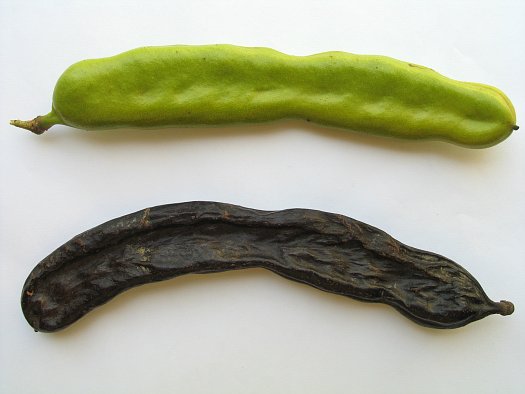
According to Wikipedia, carob comes from the Ceratonia Siliqua tree, a flowering evergreen shrub native to the Mediterranean and the Middle East. The pods are either dried or roasted and then ground into a powder that looks much like cocoa powder.

Now why would we ever want to eat this stuff, if it doesn't taste like chocolate, instead of chocolate??

There is much debate over whether or not chocolate is good for you. It's high in antioxidants, yes, but it also contains two potentially harmful substances: caffeine and theobromine. Caffeine, though some believe it to be beneficial or harmless, has some risks. (Read a few of them here.) Theobromine is very similar to caffeine - it's composition is exactly the same except for one atom - and it causes many of the same problems.

Now, I try to stay balanced here at Plus Other Good Stuff. And I love dark chocolate. But I don't eat gobs of it every day. It's an occasional treat. I'll add a handful of dark chocolate chips to my banana muffins, but I won't pack them full of it. And when I eat plain dark chocolate, I savor a square or two, instead of downing the whole bar. (I also love coffee...but I very rarely have more than a cup a day, if that.)

In addition to NOT containing caffeine and theobromine, carob DOES contain a few things that are beneficial to your health. These include significant amounts of B1, B2, niacin, vitamin K, calcium, magnesium, potassium, and many trace minerals. It contains much more protein and fiber than chocolate. (source)

An additional benefit is that Carob is naturally sweet, so anything made with carob requires less sweetener than something made with chocolate. And any way to cut down on sugar in your life is a good thing!

You can use carob powder in place of cocoa in any recipe, but keep in mind that it will change the flavor, and that you should cut back the sweetener. I love it in my carob-coconut bites, and I plan to try replacing the cocoa in a few other recipes, at least some of the time. :) It really does have a nice flavor, but you can't trick a chocolate lover.

Now where do you find it?? Like many real food ingredients, you can't find it at a typical grocery store. Try your local health food store. (Are you afraid of the health food store? I was at first. Find a friend who knows the ropes to go with you!) I order it from Country Life Natural Foods in a 5 lb bag. Actually, I only did that once, and we're still working on it. :)

What do you think? Should we eat chocolate? Have you tried carob? Did you like it?

5.14.2011

Carob-Coconut Bites


I've been looking for EASY snack recipes lately. There are all sorts of power bar and lara bar recipes out there (there are a bunch of great ones in Kitchen Stewardship's e-book Healthy Snacks to Go), but they require the use of a food processor. I have a food processor, but it's not very good at grinding nuts, and it's really loud. Often I'm making snacks while Caedmon is sleeping, so that's not really an option. That's why my favorite recipe from Katie's e-book is the Peanut Butter Kisses. You just mix together a few ingredients, form into balls, and put in the fridge until firm.

I need more recipes like that.

So I went looking here, thinking there must be something that falls into that category, and this is what I found! They were called "coconut balls" but I'm calling my adaptation Carob Coconut Bites. They are delicious, toddler friendly (no caffeine since it's carob instead of cocoa, no chunky nuts to choke on, and just slightly sweet so I don't feel guilty letting him eat it), and EASY. I mean, seriously easy.

This is how easy they are. I decided to make them in the midst of the busiest week I've had in a long time. I was STARVING due to lots of dancing, so I needed some filling snacks. I thought this would be a good choice since it has lots of healthy fat. But I got interrupted before I could form the mixture into balls, so it sat in the mixing bowl, covered with a cloth napkin, for two days. Periodically, I would dig in with a spoon and take a few bites. The ingredients are perfectly fine sitting out at room temperature, so if you don't get to it right away, it's totally ok! My kind of recipe!! The only downside was that when I did finally form them into balls, there were so few because I had eaten so much of it with a spoon! But it's so easy that I think I'll make them again soon.

If you're wondering what carob is, stay tuned for a "Word of the Day" post soon. I'll tell you all you need to know. :)

Now on to the recipe....

Carob-Coconut Bites

ingredients:
1/2 c. carob powder (or cocoa)
3 c. shredded unsweetened coconut
2 pinches of salt
3/4 c. coconut oil, at room temp
1/2 c. local honey, preferably raw
1 t. vanilla (I bet almond extract would be tasty, too, but start with less)

method:
With stand mixer or a spoon, mix together carob, coconut, and salt. Add the rest of the ingredients and mix thoroughly. (I used a mixer but I'm sure a spoon and a strong arm would work, too.) Form into balls with a spoon or your hands. (I should have used my cookie scoop! Next time!) Refrigerate 3o minutes before eating, and store the fridge to keep firm.

Let me know if you try this, I'd love to hear some feedback. :)

This is part of Feed Me Tweet Me Follow Me Home Friday, Weekend Gourmet, and Monday Mania, and Real Food Wednesday, and Pennywise Platter Thursday. Check them all out for more real food recipes and ideas!


What's your favorite homemade snack recipe?

5.08.2011

Menu Plan Monday 5.9-5.15

The first part of this week is going to be pretty busy, but I thought I'd at least share my menu with you. I'll give you links to as many recipes as I can, so you can get a feel for what kinds of things we eat in this real food home! Let me know if you have any questions or want more information about anything we're eating this week. A couple of the dinners are new recipes for us; I'll let you know how it goes!

Breakfasts:
hard boiled eggs, soaked oatmeal
peanut butter toast and cottage cheese with fruit
fried eggs with vinegar and garlic, sourdough toast
sourdough pancakes
oatmeal with an egg thrown in (you can't even tell it's there!)
eggs scrambled with veggies, toast
sourdough french toast

Lunches:
mostly leftovers of the previous dinner
tuna salad with homemade mayo
baked potatoes with broccoli and cheese
pasta with creamy tomato sauce

Dinners:
bean bowls: black beans, salsa, plain yogurt, cheese, avocado, tortilla chips
kale quiche with no-roll crust (I'm going to try adapting it for sourdough like I did here)
oven baked chicken, roasted veggies, rolls, salad

Be sure to check out more Menu Plan Monday ideas at I'm an Organizing Junkie!

5.07.2011

Why I Haven't Been Blogging

I've been too busy dancing to blog. But I think that's a pretty good reason.

My husband and I will be performing at the Holland Area Arts Council this coming Monday and Tuesday as part of their Tulip Time events. No, our piece doesn't have anything to do with Tulips. And we're not even Dutch. But I choreographed some movement, and Steven composed some music, and we're going to perform it! So if you're local, you should come! Monday at 1 PM, Tuesday at 12:30.

I'll get back to blogging soon. :)